
Choosing a used vehicle with a low recall rate can help you enjoy fewer service interruptions, stronger day to day confidence, and better long term value. This page explains what recall rates mean for shoppers, how to evaluate models with historically fewer recalls, and why maintenance history and inspections matter just as much as the badge on the grille. We outline practical steps to research any vehicle, from checking the VIN for open recalls to reviewing service records and ownership costs. You will also find model categories that tend to perform well in recall trend analyses and resources to compare options side by side. Whether you commute, haul, or need a safe family ride, start here to understand how recall data fits into a smart used car decision. When you are ready to browse, explore our used-inventory and research more on our blog.
Recall rates reflect how often a model requires manufacturer safety fixes over time. Lower rates can signal stronger engineering controls and fewer design defects, but no single number should make your decision. Combine recall research with a clean vehicle history, a thorough inspection, and a test drive. For more comparisons, visit used-inventory, research-page-template, and best-used-awd-vehicles.
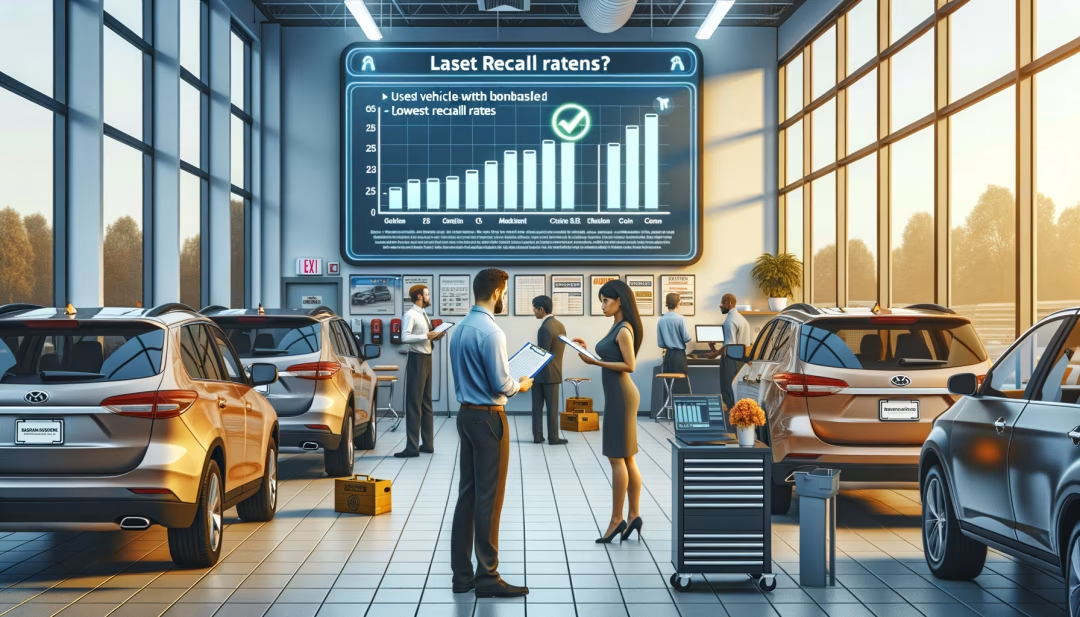
A recall occurs when a manufacturer or a safety authority identifies a defect related to safety and instructs owners to have the issue corrected. Over time, some models and brands accumulate more recalls than others. A lower recall rate can indicate that a vehicle line has fewer design level defects that require large scale corrective actions. While this is not a guarantee of perfection, it can reduce disruptions to your schedule and time spent at the service center. For shoppers, recall history is one layer in a full picture that should also include reliability records, maintenance costs, crash test performance, and owner satisfaction.
Low recall rates are most meaningful when you compare similar vehicles by segment and age. A compact car from one brand may show different recall patterns than a full size SUV because of the complexity and usage profile. Look at trends across several model years, not just a single year, and consider how quickly recalls were identified and corrected by the manufacturer. A model that received a recall early and was fixed promptly might be a safer bet than a model with an unresolved issue that lingers.
Public recall trend analyses over the past decade often highlight brands known for disciplined engineering and quality control. While results can change by model year, compact and midsize vehicles from well regarded manufacturers frequently post fewer recalls than industry averages. Luxury divisions that share engineering with parent brands known for quality can also perform well. Keep in mind that even models with very low recall counts may still have service bulletins or maintenance items that deserve attention. Use the following category notes to guide your shortlist, then verify details for each vehicle you are considering.
After you build a shortlist, compare options on our best-used-sedans, best-used-crossover-suvs, best-used-hybrid-cars, and best-used-electric-vehicles pages. Each resource helps you balance recall considerations with real world ownership factors such as space, fuel economy, and driver assistance features.
Selecting a used car with a strong recall profile is a process that blends data and inspection. Our approach emphasizes documentation, service verification, and transparent comparisons across similar models. Here is a simple framework you can apply as you browse our used-inventory.
If you are narrowing down financing or budget, visit payment-options and value-my-trade. Reliable financing and accurate trade in valuations let you focus on the right car rather than stretching for a trim that does not fit your plan.
The suggestions below point you to segments and model types that often align with lower recall activity in public trend reviews. Always validate by VIN and model year. Use these lists to kick start research, then compare availability in our used-inventory and visit best-used-commuter-cars, best-used-family-cars, or most-reliable-used-cars for deeper context.
Before you purchase any used car, run a recall check by VIN and confirm there are no open safety campaigns. Ask for printed or digital service records that prove completion of previous recall repairs. If an open recall exists, coordinate with the brand dealer to schedule the fix. Most safety recalls are performed at no cost to the owner. Document the completion date for your records. When in doubt, add an inspection through schedule-service to verify that recall work was completed correctly.
A low recall rate is one part of a complete purchase plan. A vehicle with few recalls could still carry high insurance rates or expensive brake and tire replacements. Review maintenance schedules, parts prices, and fuel economy to estimate your annual costs. Cross check options on used-cars-with-lowest-repair-costs, used-cars-with-lowest-cost-of-ownership, and used-cars-with-best-resale-value to find the sweet spot of safety, reliability, and value.
Even vehicles with the lowest recall rates deserve a complete inspection. Use this checklist during your evaluation or bring it to schedule-service for a pre purchase review.
Many shoppers seek a balance of price, safety, and reliability. Value models from brands with rigorous quality control can be excellent choices. Explore best-used-cars-under-15000, best-used-suvs-under-20000, and most-reliable-used-cars-under-15000 to find options that often pair steady recall histories with smart pricing. Remember to validate each VIN for completed recall work and factor in condition and mileage.
Recalls address known defects, but a high confidence vehicle also earns strong crash test scores and owner satisfaction ratings. If safety is your priority, complement this page with safest-used-cars, used-cars-with-best-safety-ratings, and best-used-cars-for-teens. These resources help you weigh crash performance, driver assistance features, and visibility with the peace of mind that comes from a low recall history.
Use these links to deepen your research and prepare for a smooth purchase experience.
Automotive recalls change over time as new issues are identified and resolved. The discussion on this page reflects general observations about recall trends and segments that often perform well. Always validate the exact vehicle you intend to buy by checking its VIN for open recalls, reviewing its service records, and completing a mechanical inspection. This multi step approach helps you move from broad recall statistics to a confident choice for your driveway.
If you want a used vehicle with one of the lowest recall footprints possible, combine this guide with a VIN recall check, a service history review, and an independent inspection. Browse current options in used-inventory, ask questions through contact-us, and keep exploring related research pages to confirm the best match for your driving needs.
For information about data handling and site policies, visit privacy-policy, terms, and visitor-agreement. Our goal is to provide accurate, timely content and transparent information to help you make a confident choice.

